
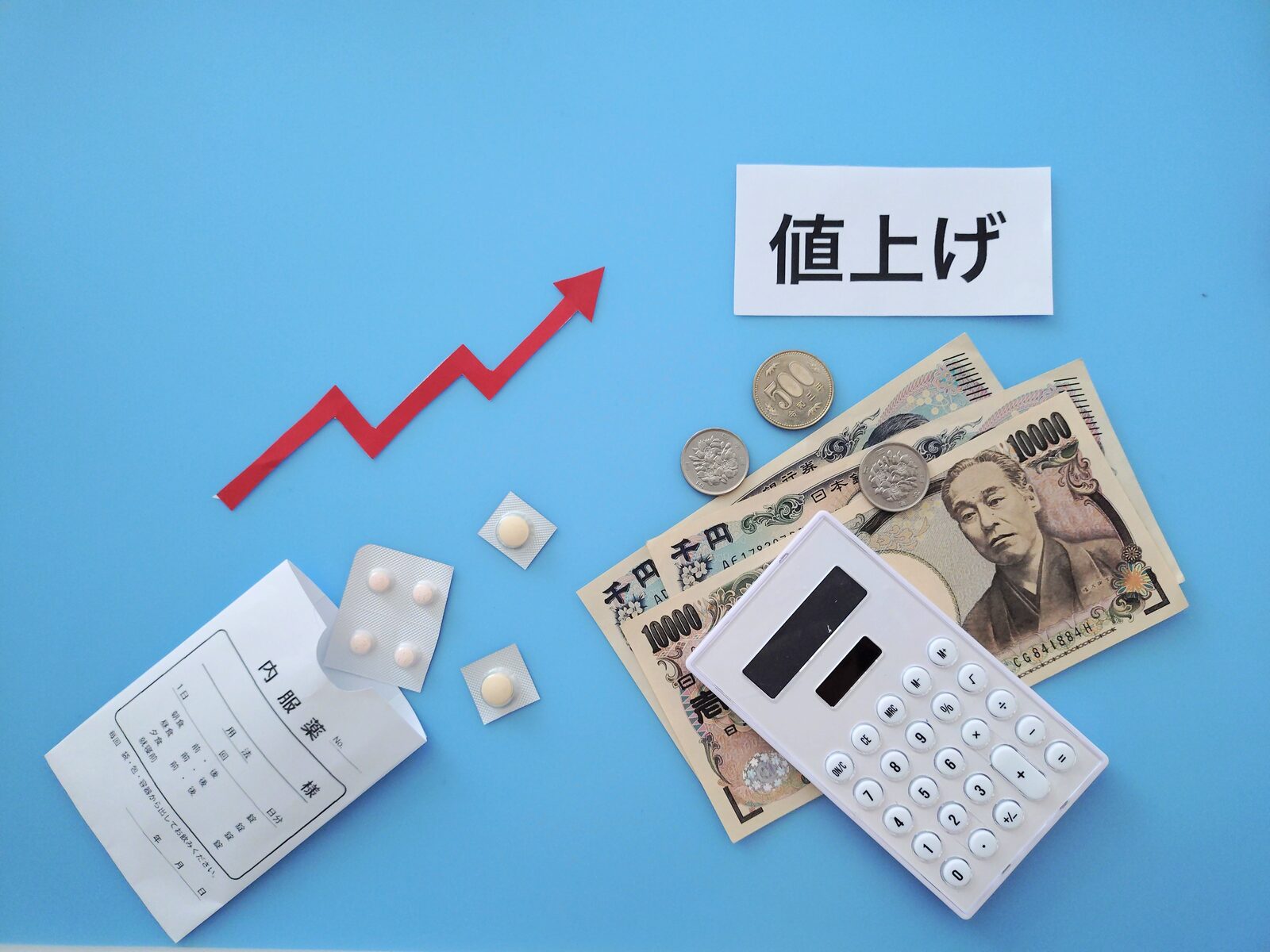
Materials have doubled in five years. Our rates are up ten per cent.
“The materials aren’t coming in,” we wrote last time. One thing has changed since.
The paste is coming through again.
Around eighty per cent of the way back, by our reckoning. The ancillaries that had stopped are moving, and “we have the wallcovering but we can’t hang it” has become rare.
But what was left behind, once the goods came back, was the price.
This increase is not like the ones before
There have been price rises before. What actually reached the invoice was usually smaller than the announcement: a 10% notice meant about 5% in practice, a 20% notice about 10%. You could change the product code, or use up what was left in stock. There were ways around it.
This time there is no way around it.
- Almost every maker raised prices together, so there is nothing to switch to
- The ancillaries went up as well, so the smaller the job, the higher the percentage comes out
- Once the old stock is gone, the goods arrive at exactly the announced price
The notices said 18–30%. Having actually bought at the new prices: a genuine 20-plus per cent. This is not “it feels like it went up.”
Compared with five years ago, it is close to double
The clearer comparison is with five years ago.
The same item now costs roughly twice as much. The 5 mm melamine-faced plywood we wrote about — ¥8,000 a sheet — would have been unthinkable five years ago.
That is how it feels on site. The statistics move in a similar direction. Here are the Bank of Japan’s corporate goods price indices (2020 average = 100) as of June 2026.
| Item | Index | vs 2020 |
|---|---|---|
| Cement | 166.2 | +66.2% |
| Ready-mixed concrete | 160.2 | +60.2% |
| Small steel bar (rebar) | 155.4 | +55.4% |
| Plywood / glued laminated timber | 151.5 | +51.5% |
| Sawn timber | 140.1 | +40.1% |
The statistics say 1.5×; on site it feels like 2×. We think the gap is because the index is a national average and includes bulk trades. Buying one or two sheets at a time lands above the average.
Either way, this is not a level that “comes back down.”
Our rates have gone up ten per cent
This is the point of the article.
If materials have doubled in five years, our own rates ought to have moved too, or the arithmetic does not work. Not double. But fifty per cent, forty per cent — something.
In reality, we are ten per cent above where we were five years ago.
For the record, labour costs have risen officially as well. The public works design labour rate published by the Ministry of Land, Infrastructure, Transport and Tourism came to a national weighted average of ¥25,834 per day for the rates applying from March 2026, up 4.5% on the year. That is the fourteenth consecutive rise, and the first time it has passed ¥25,000.
So: materials are up. Labour is officially up. And the rate we are paid has moved ten per cent.
Somebody is carrying that gap
The gap does not vanish. Something absorbs it.
What absorbs it is the contractor.
In the last post we wrote: the order is already taken, the price is already agreed, and every extra day comes out of the margin. The same thing is happening over a longer stretch. Five years of materials doubling against rates rising ten per cent — that difference comes straight out of the margin.
This will not be only us. Other firms in the trade buy the same materials at the same prices.
Why it is still hard to raise prices
Knowing all this, there are reasons it does not happen.
One. Only the number is compared. When three quotations are laid side by side, what gets compared is the figure. “We have the materials secured, so the schedule will hold” does not sit next to the number.
Two. Raising it takes time to bring up. The person at the management company has someone above them to clear it with. “Materials went up” is not enough on its own. You need to set out what went up and by how much, on paper. And the time to prepare that paper falls in the hours we least have.
Three. We are afraid of being turned down. This is the honest one. The longer the relationship, the harder it is to raise.
We put it in the quotation anyway
Where a job straddles a revision, we say so and reissue the quotation. We do not raise prices quietly, and we do not quietly swallow them either.
And we have started putting on record what went up and by how much, in posts like this one. One line saying “due to rising material costs” in a quotation carries less than the actual index alongside the price we actually paid. That is what this post is for.
Finally
The paste is back. The prices are not.
“The goods aren’t coming” was a temporary problem, and eighty per cent of it has passed. But there is no mechanism that brings a price increase back down. Notices of price reductions essentially do not get sent.
Materials doubled in five years; rates rose ten per cent. Right now, the contractor is holding that gap. How long that holds, we honestly do not know.
Sources
- Construction materials price trends 2026 (Bank of Japan CGPI, 5 items)|Genba Media (as of June 2026. Bank of Japan corporate goods price index, 2020 average = 100)
- Public works design labour rates FY2026|weighted average ¥25,834, fourteenth consecutive rise|Genba Media (Ministry of Land, Infrastructure, Transport and Tourism, published 17 February 2026)
- Construction costs|Japan Federation of Construction Contractors
- Notice of price revision|Sangetsu (announced 13 April 2026)